Engineering goods are at the heart of global trade. From fasteners and bearings to industrial machinery, precision
components, electrical equipment and specialized manufactured parts, engineering products support almost every major industry around the world.
In 2026, the global engineering supply chain is being influenced by several major forces: infrastructure development, industrial automation, electrification, electric vehicles, renewable energy, data centers, reshoring and supply-chain diversification.
For buyers, this is creating an important question: Where can we source reliable engineering products at competitive prices while reducing supply-chain risk?
India is increasingly becoming part of that conversation. For manufacturers and B2B buyers, understanding these global trends is important before deciding where and how to source engineering products.
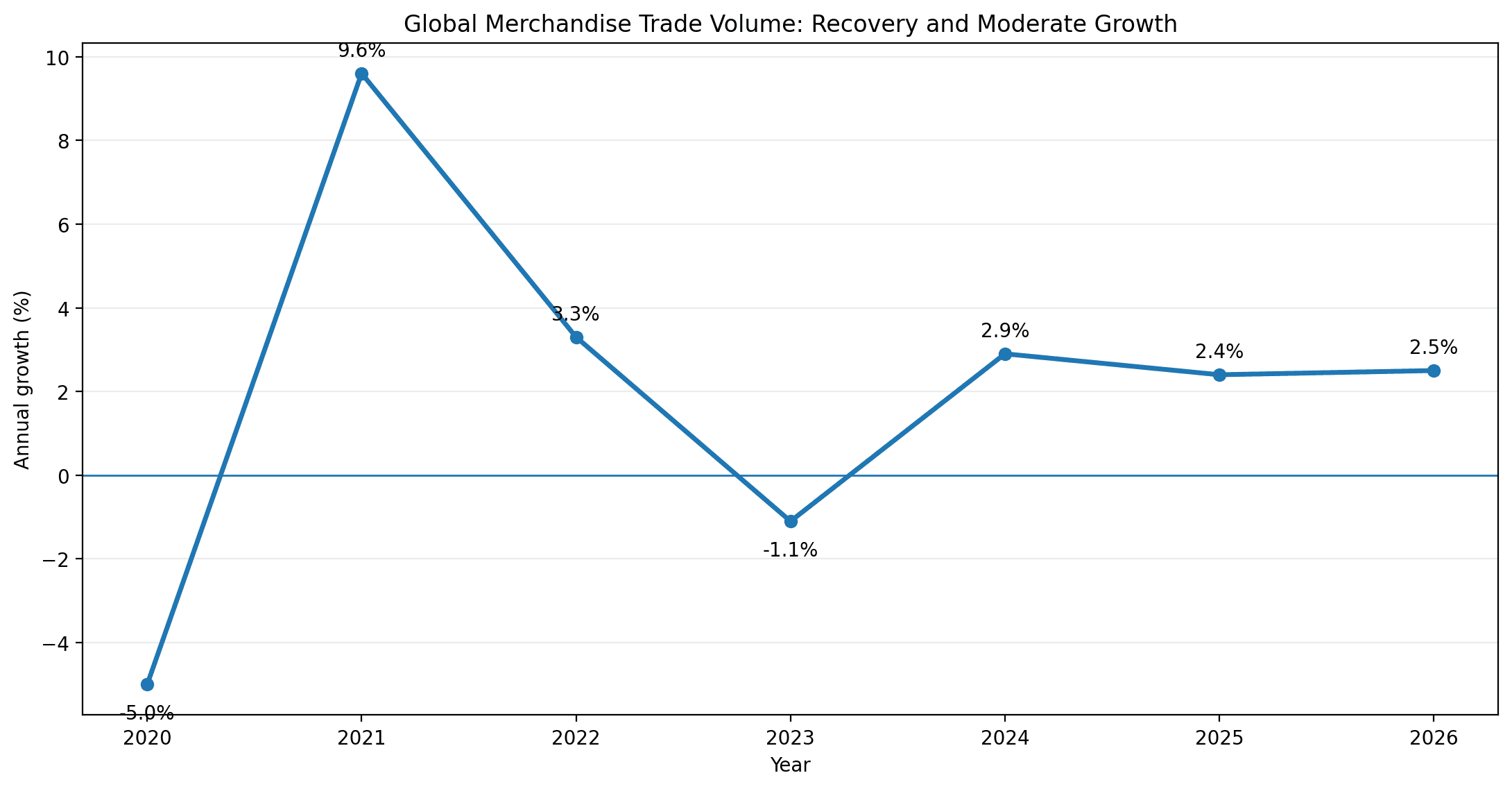
Global Trade Is Recovering Global merchandise trade experienced significant disruption during the pandemic, followed by a strong rebound and subsequent normalization.
According to the World Trade Organization (WTO), global merchandise trade volume increased strongly in 2021 before slowing in 2022 and declining in 2023. Trade recovered in 2024, while the WTO's April 2025 outlook projected moderate growth for 2025 and 2026.
Global Merchandise Trade Volume Growth
The trend is important for engineering-product suppliers and buyers. Global trade is not simply disappearing. Instead, supply chains are becoming more diversified, more regional and more
focused on resilience and cost efficiency. That creates opportunities for manufacturers in countries such as India.
5 Major Trends Shaping Global Engineering Goods
1. Supply-Chain Diversification Is Becoming a Priority For many years, global manufacturers concentrated large portions of their sourcing in a limited number of countries.
Recent disruptions have encouraged companies to develop:
• Alternative suppliers • Multi-country sourcing • Regional supply networks • Backup manufacturing partners • Dual sourcing strategies
For engineering products, this is particularly important because a shortage of a relatively small component—such as a bearing, bolt, washer or machined part—can interrupt an entire production line.
The new sourcing approach Old Model
One major supplier → One country → High dependency
Emerging Model Multiple qualified suppliers → Multiple sourcing locations → Greater resilience
This creates an opportunity for Indian manufacturers to become part of international supplier networks.
2. Infrastructure Investment Is Supporting Engineering Demand Infrastructure remains one of the major consumers of engineering products. Construction and infrastructure projects require enormous quantities of industrial components, including: • Structural fasteners • Anchor bolts • Nuts and washers • Bearings • Industrial hardware • Fabricated components • Pipes and fittings • Machinery components
Infrastructure development across Asia, the Middle East, Africa and other emerging markets can therefore create opportunities for engineering manufacturers.
For Indian suppliers, the opportunity is not limited to finished machinery. Thousands of smaller components are required throughout the infrastructure supply chain.
3. Industrial Automation Is Changing Engineering Requirements
Factories around the world are becoming increasingly automated. Robotics, CNC machinery, automated production lines, warehouse automation and smart manufacturing systems require reliable mechanical and precision components.
This is increasing demand for products such as: Bearings → Precision Components → Fasteners → Shafts → Couplings → Machined Parts → Industrial Hardware
Automation also increases the importance of: • Dimensional accuracy • Material consistency • Surface finish • Repeatability • Quality control • Traceability
This means buyers are increasingly looking beyond the lowest price. Consistency and reliability are becoming equally important.
4. Electrification Is Creating New Engineering Opportunities
The global transition toward electrification is another major trend affecting engineering manufacturing. Electric vehicles, battery manufacturing, charging infrastructure, renewable energy systems and electrical equipment require
large ecosystems of components. This creates opportunities across areas such as: • Precision components • Fasteners • Bearings • Electrical hardware • Sheet-metal components • Machined components • Enclosures • Specialized industrial parts
The engineering supply chain around electrification is therefore much larger than the vehicle itself.
5. Data Centers Are Creating a New Industrial Demand Segment
One of the fastest-growing areas of global infrastructure investment is digital infrastructure.
Data centers require extensive: • Cooling systems • Power equipment • Electrical infrastructure • Structural systems • Racks and enclosures • Mechanical components • Industrial fasteners • Backup power systems
The growth of cloud computing, AI infrastructure and digital services is therefore creating indirect demand for a wide range of engineering products.
The connection looks like this: AI & Cloud Computing
More Data Centers
More Infrastructure Investment
More Electrical + Mechanical Equipment
More Engineering Components
This is an important example of how technological trends can create demand for traditional engineering products.
Which Engineering Products Are Positioned for Global B2B Demand?
The opportunity is not limited to large machinery.
A significant part of industrial procurement involves relatively small components that are purchased repeatedly. Fasteners • Hex Bolts • Hex Nuts • Washers • Anchor Bolts • Threaded Rods • Studs • U-Bolts • Screws • Stainless Steel Fasteners • High-Tensile Fasteners
Mechanical Components • Bearings • Shafts • Bushes • Couplings • Precision Components • Machined Components
Industrial & Construction Products • Industrial Hardware • Structural Components • Construction Fasteners • Fabricated Components • OEM Parts
For Sample Store, fasteners and bearings are particularly interesting categories because they are standardized, specification-driven products that buyers frequently source in volume.
Why India Is Becoming Important for Engineering Sourcing
India has a large manufacturing ecosystem consisting of:
Large manufacturers + specialized MSMEs + engineering clusters + export-oriented suppliers
This gives international buyers access to a wide variety of manufacturing capabilities.
India also has established engineering manufacturing clusters across regions such as: • Punjab • Gujarat • Maharashtra • Tamil Nadu • Karnataka • Telangana • Delhi-NCR
Different regions specialize in different engineering products and manufacturing capabilities.
For a buyer outside India, however, finding the right manufacturer can still be difficult. That is where a sourcing partner can create value. The Problem Isn't Finding a Supplier. It's Finding the Right Supplier. A simple Google search can produce hundreds of Indian suppliers.
But a serious B2B buyer needs answers to much more important questions: Can the manufacturer meet my specification? Can they maintain consistent quality? What is their MOQ? Can they provide samples? What material and grade are being used? Can they meet my required production quantity? Can they provide the necessary documentation? Can they maintain the required delivery schedule? Supplier discovery is therefore only the first step. From Price-Based Sourcing to Value-Based Sourcing The global engineering market is also changing the way buyers evaluate suppliers. Previously, purchasing decisions were often dominated by: PRICE Today, procurement teams increasingly consider: Price + Quality + Reliability + Lead Time + Capacity + Compliance + Supply-Chain Risk This is particularly important for engineering goods.
A $1 saving on a component may not be valuable if inconsistent quality causes production downtime. Therefore, the future of engineering procurement will increasingly involve supplier qualification and relationship building, rather than simply finding the lowest quotation.
What This Means for Indian Engineering Manufacturers
The global opportunity is significant—but competition is also increasing. Indian manufacturers looking to enter international markets need to present themselves professionally. International buyers increasingly expect: • Clear product specifications • Technical drawings where applicable • Material information • Product photographs • Quality documentation • Certifications where required • Consistent communication • Professional quotations • Reliable packaging • Export capability
Being a capable manufacturer is important.
Being easy for an international buyer to evaluate is equally important.
The Future of Engineering Sourcing
The global engineering supply chain is moving toward a model that is:
More Diversified Buyers want alternatives and backup suppliers.
More Digital Supplier discovery increasingly begins online.
More Data-Driven Specifications, quality data and supplier performance matter.
More Flexible Buyers increasingly look for manufacturers capable of different quantities and product requirements.
More Resilient Companies want supply chains that can withstand disruptions.
India's Opportunity in the Global Engineering Market India's engineering manufacturing ecosystem gives international buyers another potential sourcing base as companies diversify their supply chains.
The opportunity extends beyond large industrial equipment. It includes the thousands of products that keep global industries operating: Bolts. Nuts. Washers. Bearings. Fasteners. Machined Parts. Industrial Components. OEM Parts. These products may look small individually. But collectively, they form a critical part of global manufacturing.
Conclusion: Global Demand Is Changing—So Is Sourcing The engineering goods market is being shaped by several major global trends: Infrastructure → Automation → Electrification → Data Centers → Supply-Chain Diversification These trends are creating opportunities for manufacturers and suppliers across the world. For international and Indian B2B buyers, the challenge is no longer simply: “Where can I buy this product?” The more important question is: “Which manufacturer can consistently supply the right product at the right quality, quantity and commercial terms?” Sample Store is being built around solving this sourcing challenge by helping buyers discover Indian manufacturing sources, coordinate samples, compare suppliers and move toward procurement. Looking to Source Engineering Goods from India? Fasteners | Bearings | Nuts & Bolts | Washers | Industrial Components | Custom Engineering Products Explore Indian manufacturing sources with Sample Store.
🌐 https://www.samplestore.co.in/ Sample Store — Simplifying Product Sourcing from Indian Manufacturers.